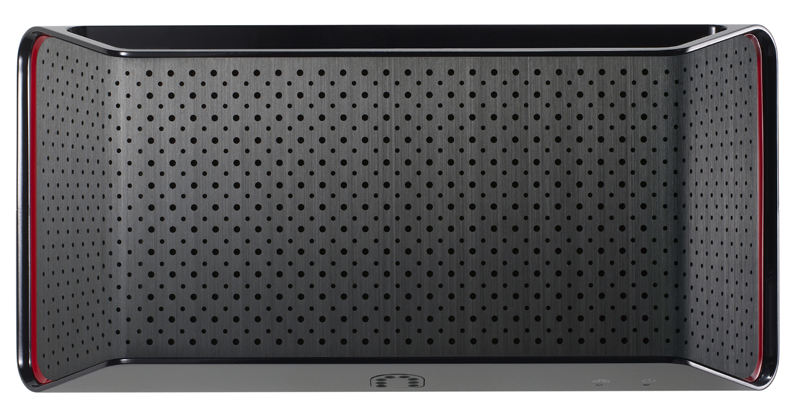
Sharp to launch 1TB Blu-ray recorder in Japan

On December 1, Sharp will introduce a DVR/Blu-ray recorder in Japan with a 1TB hard drive for 300,000 yen (~$2,615). It will be able to record up to 127 hours of HD content. This will be the high-end model in a lineup of nine different Blu-ray recorders that Sharp will introduce in Japan by year’s end.

From CNET News.com.

Posted in Blu-ray/HD DVD | Leave a comment

Sling Media launches the Slingbox SOLO – and a Slingbox PRO for the UK

Slingbox SOLO

It turns out the FCC leak of the Slingbox SOLO information three weeks ago wasn’t too far in advance, as today Sling Media officially announced the new box. What I couldn’t say at the time was that I had, and still have, a pre-production unit at home that I’ve been trying out. Now Sling told me I can talk about it. I’ve been told the official press release will hit Thursday morning, so I’ll post that when I get it.

The new SOLO slots into the product line between the AV and the PRO. Updating Sling’s own product feature comparison table:

 TunerAVSOLOPRO
Widescreen (16:9) supportXXXX
High quality programmable video compressionXXXX
Watch & Control any PC/Mac/LaptopXXXX
Watch & Control from mobile phonesXXXX
TV/analog cable tunerX  X
Pass-through connections for seamless integration into current A/V configurationsX XX
Connects to set-top box (digital cable, satellite, DVR) XXX
Remote-Control of A/V devices XXX
Connect HD component devices  XX
Connect & Control up to four A/V Sources   X

The SOLO is also Sling’s first simultaneous international launch – it will be available in the US for USD$179.99, Canada for CAD$199.99, and the UK for £129.99. The UK model is slightly different from the US/Canadian model, having a different IR chipset and the inputs are set for the UK’s 50Hz video frequency instead of the North American 60Hz refresh. The SOLO’s $179.99 price falls right between the AV & Tuner’s $129.99 and the PRO’s $229.99

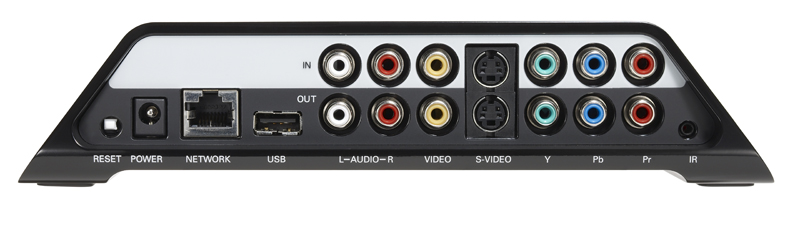
Slingbox SOLO rear ports

The Slingbox SOLO is basically a Slingbox AV with the addition of component input, pass-through connections and a USB port. The rear of the unit has an IR blaster port, component video (Y, Pb, Pr) in & out, S-Video in & out, composite (RCA) video in & out, audio L/R (stereo) in & out, USB, Ethernet, and power connections, as well as a reset button. The unit ships with a Quick Start Guide, power adapter (which is not compatible with older Slingboxes – do not plug an old SB power brick into the SOLO, or vice-versa), Ethernet cable, remote control IR cable, and a composite A/V cable (composite video & stereo audio). The UK model will reportedly also come with a SCART to RCA adapter. You’ll have to supply your own S-Video or component cables.

The USB port is currently ‘For Future Use’ and Sling isn’t saying what that will be. When I first saw the unit, and in my earlier post, I speculated that it might mean SlingCatcher functionality was incorporated into the unit. However, having had more time to think about it, I doubt that is the case. The SlingCatcher will ship with a remote – the SOLO does not. Also, the SlingCatcher has HDMI and digital audio output, and the SOLO does not – which would make it a lower quality Catcher. I now believe the USB port is most likely meant to support a USB WiFi adapter in a future update, in the same way TiVo does. Only time will tell, of course.

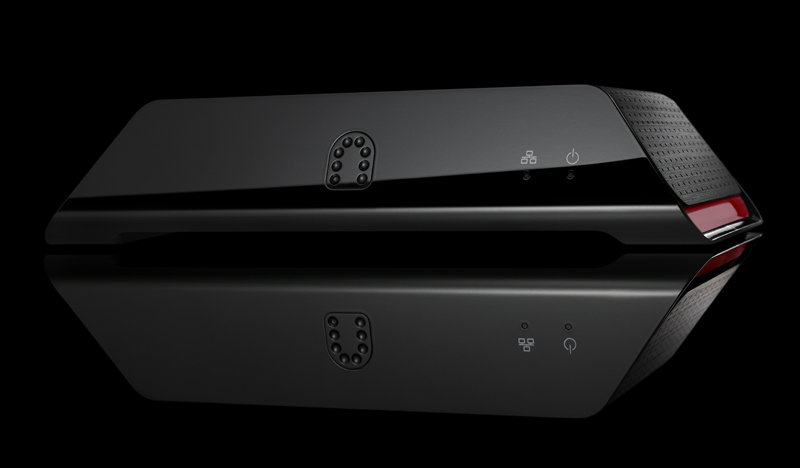
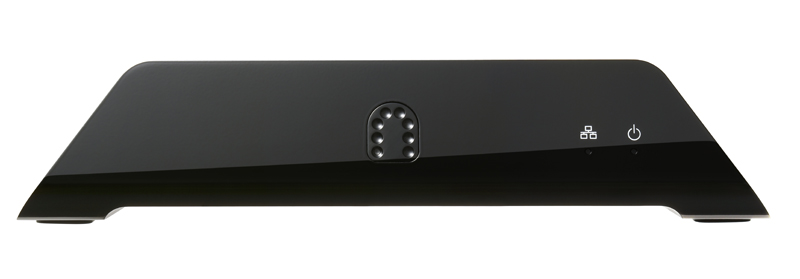
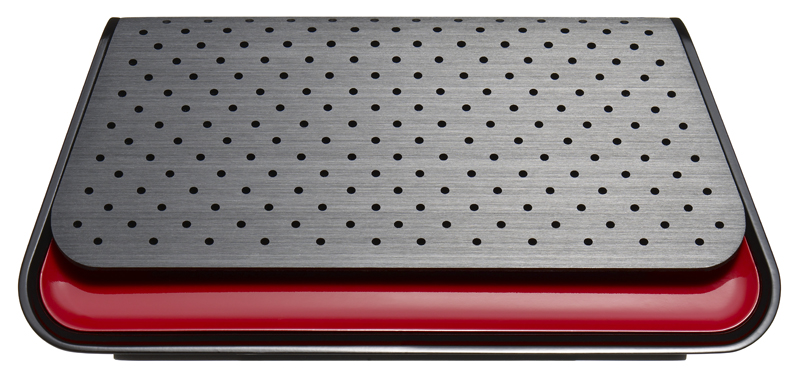
As you can see from the photos, the SOLO is almost entirely glossy black, with red highlights. It is a very nice looking unit. Click on the images for a larger version:

Slingbox SOLO profile Slingbox SOLO front Slingbox SOLO back Slingbox SOLO side Slingbox SOLO top

Note that while the SOLO has multiple video inputs it, like the AV, is meant to control just one input device. There is only one audio input. However, as with the AV, you could connect devices to the other video inputs. Devices that don’t need audio, like a security camera, are simple. But you could also connect other devices if you share the audio input with Y-cables. You just need to make sure only one device is active at a time so that you don’t have multiple devices feeding audio to the Slingbox at the same time. But note that this is not officially supported or endorsed, and the IR blasters that come with the unit only have two emitters. If you need to support multiple devices, the Slingbox PRO is a better option. (Right now you can get a special Slingbox PRO and Sling HD Connect Cable Bundle for only $189.99 from Buy.com.)

Speaking of the PRO, Sling is finally launching a version for the UK. It will be £199.99 and it includes the HD Connect cable. The built-in tuner in the UK model will support DVB-T.

My personal impressions of the SOLO are all positive. It is a nice looking, solidly built little box, and it performs as advertised. I’ve been using it with my TiVo Series3, mainly the component input, and it works just as I’d expect. I’d say it is just as good as my Slingbox PRO in encoding and streaming video. It has all of the functionality of the other Slingboxes, as far as the software goes. If you already have a Slingbox, there is nothing in the SOLO that would indicate a need to upgrade – unless you could use the component input. But if you’re looking to get your first Slingbox, the SOLO is definitely worth a look. If you only have one device to connect and you can take advantage of the component input, or having the pass-through ports would make your wiring job easier, then the SOLO is the right box for you. If you don’t need the component or pass-though, the AV is probably the best choice. And if you need to easily support multiple devices, check out the PRO.

The major online retailers don’t have the SOLO listed yet, and it isn’t even in Sling’s own store, so I’ll post links to purchase it once it goes up.

EDIT: The Slingbox SOLO (SB260-100) is now available from Amazon.
EDIT 2: BestBuy.com has it now.
EDIT 3: Buy.com has it now as well.


Posted in Sling Media | Leave a comment

CableLabs Certifies new Sling Media cable modem – and more on the Echostar buyout

Remember the Sling Meda cable modem the FCC leaked in August? Well, now Cable Digital News is reporting that it has been certified by CableLabs. This is according to sources, but perversely CableLabs may have confirmed it has at least been submitted for testing:

A CableLabs spokesman declined to comment, noting that Sling Media had requested the R&D house not disclose the vendor’s certification status.

If there was no product and it hadn’t been submitted for certification testing, then there wouldn’t be any certification status to not disclose. QED.

With FCC approval and CableLabs approval, Sling should be clear to bring the product to retail. (I do love the circular nature of the web – the Cable Digital News article links to my earlier post as an example of the previous FCC reports. Nice to see it was ‘thoroughly detailed’.)

And, in other news, SlingCommunity.com sat down with Sling’s Blake Krikorian to discuss the EchoStar buyout and more. It is a good read.

And I have some more big Sling news – but it deserves its own post.

Posted in Sling Media | Leave a comment

Forbes.com interviews Sling Media’s Blake Krikorian

Following last night’s news of Echostar’s acquisition of Sling Media, Forbes.com sat down with Sling’s co-founder, chairman, and CEO, Blake Krikorian to discuss the buy-out and their plans going forward. Sling will become a wholly-owned subsidiary of Echostar, and continue to operate independently, selling their products at retail internationally and working with other partners. I’m a little nervous – I like Sling, and this could be good, but it could also go wrong. Almost exactly 10 years ago, in late 1997, the startup tech company I worked for, Livingston Enterprises, was acquired by a much larger company, Lucent Technologies. Things were OK at first, but then they started meddling in our product plans, design, etc. A year later Lucent acquired another company that had been Livingston’s main competitor, and people from that company got into management and basically strangled what was left of Livingston at that point. So I’ve seen this kind of deal go sour.

On the other hand, it could work out very well if Echostar handles them right. Having the security of a large parent company can allow a subsidiary to take more risks. You don’t have the constant concern of making or breaking the company on new products – not as much as when you’re answering to investors anyway. Echostar’s technology portfolio and established industry contacts could be useful to Sling. And their deep pockets sure won’t hurt. Sling has struggled to develop new products and continue to update their existing products within the constraints of their budget – matching hiring to sales growth, etc. With Echostar backing them, it is conceivable that they could hire more developers and devote more resources toward bringing products like Clip+Sling and Sling Catcher to market, as well as updating their SlingPlayer software and filing down some rough edges. (The TiVo remote selection is kind of a mess, for example.) So this could lead to a more polished and poised Sling. It will certainly be something I’ll be watching closely, and I’m cautiously happy for my friends at Sling.

Blake summed up the potential upside in his interview:

What can you do as part of EchoStar that you couldn’t do on your own?

Our pockets will be a lot deeper so I don’t have to be out there raising money every 12 months. Unknown to many people, even me, is the tremendous technology portfolio and engineering resources that EchoStar has. They’ve deployed more direct video recorders than anybody else in the world. They’ve built their entire dish network–and everything that supports it–themselves, including the billing systems, the backend, uplink facilities, and so on. So there’s a lot of raw ingredients that we can pull to accelerate our development.

Blake also dropped this interesting tidbit:

Does that mean we won’t see a Slingbox integrated into an EchoStar Dish?

It will be great to see Sling embedded in Dish network products. But the first products with Sling embedded may be with a different operator.

Interesting. We know Sling has been working with DirecTV in other areas. Just tossing that out there.

Read the article for the full interview.

In related news, Broadcast Newsroom is reporting that Clip+Sling will launch in early 2008.

The project is on track to enter beta before the end of 2007 with a public launch “more around the first of the year,” [Sling Media Entertainment Group President Jason] Hirschhorn said. “I’ve got my creative guys trying to finish Clip + Sling … We have a lot of work to do.”

Posted in Sling Media | 1 Comment

Format war bouillabaisse

Collecting some of the current Blu-ray / HD DVD format war news that came out today, I’ll start with High-Def Digest’s report (via EngadgetHD) on a recently released report by Forrester Research, that the format war is still Blu-ray’s to lose. Forrester still believes that Blu-ray can win the war, but they’re less sure of it than in the past, with the recent shifts in allegiances. Forrester feels that the Blu-ray camp needs to be more aggressive in marketing their format this holiday season – specifically that they should release a player for under $250, pump out more titles, and use more promotions. Even with that, Forrester thinks the war will continue at least another 18 months (probably not coincidentally, the length of Paramount’s exclusivity agreement with HD DVD).

Starting from the same Forrester report, CNET News.com also discusses the war. Some of the figures in the article seem to be a bit off – while a low-end standalone Blu-ray player does list for ~$500, Toshiba’s entry-level HD DVD deck lists for ~$300 – not $400 as in the article. And the yet-to-be-released Venturer unit will reportedly list for ~$200. I do agree that the Blu-ray camp really needs to offer a low-end player – at least something under $300, but if they can push it lower, all the better.

Meanwhile, The Wall Street Journal Online has an overview of the format war. Not much new for those who have been keeping tabs, but a decent overview of the current situation.

Posted in Blu-ray/HD DVD | Leave a comment